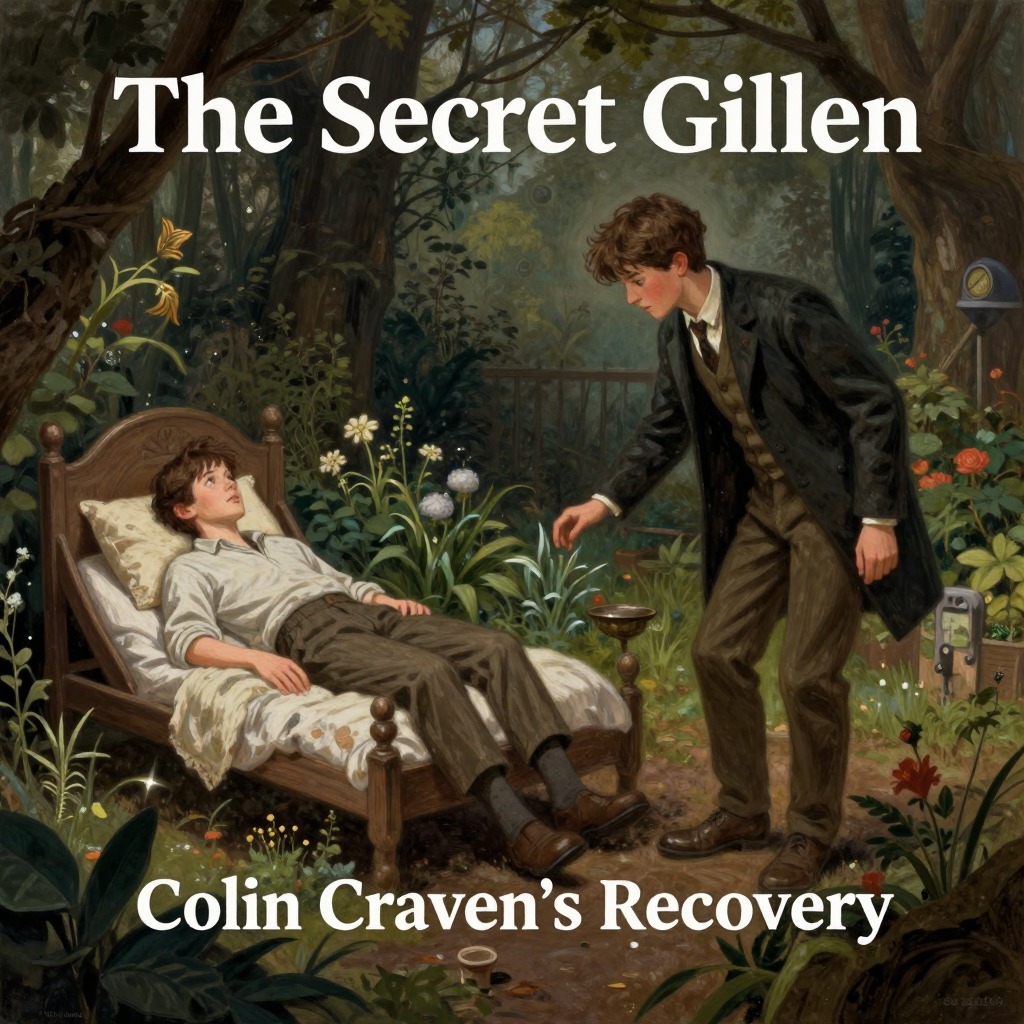
Colin's Wheelchair
Colin's Wheelchair is the object around which the central drama of Colin Craven's recovery revolves. For years it was the only means by which the sickly boy could leave his room, a rolling prison that advertised his weakness to the world. Yet it also became the instrument of his liberation, carrying him into the secret garden where the Magic of spring and friendship began to transform him. The chair's journey from a symbol of invalidism to a discarded relic marks the physical and psychological arc of Colin's return to health.
Physical Description and Initial Use
The wheelchair was a substantial piece of equipment, described as having "luxurious cushions and robes" that made it look "rather like some sort of State Coach" when Colin was settled in it. It was pushed by servants or, later, by Dickon Sowerby, who proved to be the most steady and gentle of its handlers. The strongest footman in the house carried Colin downstairs and placed him in the chair, where rugs and cushions were carefully arranged around him before he would permit himself to be wheeled outside. For Colin, who had spent nearly all his life lying down, the chair was the only acceptable alternative to his bed.
The Chair as a Vehicle to the Secret Garden
The wheelchair became the crucial instrument for transporting Colin to the hidden garden without arousing suspicion. On the momentous afternoon of his first visit, Dickon pushed the chair slowly and steadily along the carefully planned route, with Mary Lennox walking beside it. Colin leaned back and lifted his face to the sky, drawing in deep breaths of the moor air. When they reached the ivy-covered wall, Mary took hold of the hanging green curtain and commanded, "Dickon push him in—push him in quickly!" Dickon did it "with one strong, steady, splendid push," and the chair rolled through the hidden door into the garden. Once inside, Colin dropped back against his cushions, covering his eyes with his hands until the door was closed, then looked round and round at the transformed space.
The Chair as a Prop in the Deception
After Colin began to recover, the wheelchair became a central prop in the "play actin'" the children devised to keep his improvement secret. Colin was carried down to his chair every time he went out, and he would "fly out at John, th' footman, for not carryin' him careful enough." He made himself look as helpless as possible, never lifting his head until they were out of sight of the house, and grunting and fretting while being settled into the chair. Mary would play along, saying, "Poor Colin! Does it hurt you so much? Are you so weak as that, poor Colin?"—though sometimes they could scarcely keep from bursting out laughing. Once safe in the garden, they would laugh until they had no breath left, stuffing their faces into Colin's cushions to keep the gardeners from hearing.
Abandonment and Symbolic Discarding
The wheelchair's ultimate fate was to be abandoned. After Colin stood up on his own feet for the first time, defying Ben Weatherstaff's assumption that he was a cripple, he declared, "I am never going to get into the chair again." The rugs were tossed on the ground, and Colin walked back to the house with his father, leaving the wheelchair behind. The object that had once defined his existence—the chair that carried him everywhere, that marked him as an invalid, that served as his throne and his cage—was no longer needed. Its abandonment was the final, visible proof that Colin had truly come alive.